About

This is a blog for the online class in summer 2010. My plan is to use this as the space for my "notes", clarification, and to relay anything of interest to students.

Tuesday, July 13, 2010

Feedback on map work

Hey, this has been one quiet online class so far.  Other than that brief flurry of discussions related to an assignment that was due, well, it has been way more than all quiet on the Western front (wasn't that a pun!)
I trust it is because things are going peachy; let me know if otherwise.

Now, before I get to the map work stuff ...
I am sure you have not forgotten the piece on Uganda that you read. And, maybe that was the trigger for you to ever look up a country called Uganda on a map, thanks to which you now know where it is.  (The country is way more notorious for Idi Amin, the cannibal dictator, portraying whom won the Oscar for Forrest Whitaker.)

Anyway, the last couple of days Uganda has been in the news because of bomb blasts that killed many during the World Cup finals:
At least three bombs exploded on Sunday night in the Ugandan capital, Kampala, while the World Cup match between Spain and the Netherlands was under way in South Africa. ...
Visiting the sites of the bombings on Monday, President Yoweri Museveni of Uganda condemned the attackers as "backwards and cowardly." ...
Officials said that besides Ugandans, the dead included Indian, Ethiopian, Eritrean and Congolese nationals.
On the one hand, by taking a course like this, you get to know the rest of the world.  On the other hand, it then also means that we begin to realize that it is one chaotic world out there, among all the good things as well.  We then realize all the more that Humphrey Bogart's Rick was right in Casablanca when he says, "it doesn't take much to see that the problems of three little people don't amount to a hill of beans in this crazy world."

Now, that was a movie ... but, I digress!

Of course, the latest map work assignment you submitted was not about Uganda or East Africa, but was about North Africa and West Asia.

You would have noticed as you put together the maps for the region that the Saudi Arabian peninsula is in the heart of this geographic area.

And then it might have suddenly dawned on you that Europe is not far away from these places.
Of course, Spain and Morocco have a long history--the French also had their influence on Morocco, which comes across very well in, ahem, Casablanca!  It is only a slight exaggeration that Morocco is only a stone's throw away from Spain. And that is one huge stone: Gibraltar ... hahaha ...

BTW, Gibraltar itself is a British territory--neither Spain's nor Morocco's!

My point here is that sometimes merely looking at a regional map will begin to reveal an incredible number of stories.  As I noted at least once before, get yourself an inexpensive world atlas if you already don't have one, and the school-less month of August will become that much more exciting :)

To a large extent, this North Africa/West Asia was about one-half of the Ottoman Empire at its peak, as the following map shows:

So, yes, this is a region that has a lot of history.  After the end of World War I, in which the Ottoman's did not side with the winning side, the empire was carved up among the victorious, and later on led to the formation of many of the countries with their current borders.  The unfortunate downside is that this is also one of the regions in the contemporary world that seems to cause way more than its fair share of geopolitical news.

Wouldn't you agree with me that the university needs to offer courses about the countries in this region? ... unfortunately, here at WOU, we don't offer enough courses for students to begin to understand the land and its peoples.  I don't mean merely the Geography Department, but the entire university.   I tried to rally colleagues about this  way back in 2003, and soon realized what it means to follow in the footsteps of Don Quixote and feel like I am tilting at windmills ...
But, I digress,, again :)

So, there you have my lecture, with a bunch of hyperlinks.  As always, I am all ears (idiom-wise!) for your rejoinders and comments.

I will soon email you my feedback and grade.

Friday, July 9, 2010

Essay 3 Question

Hey, if you are like me ... well, I feel sorry for you ... ha ha ha :)

Ok, if you are like me, then you are thinking it will be neat if the sun's light and heat were evenly distributed throughout the year. We could have 70 degree days all the time.
In fact, a few years ago, a mathematician/physicist proposed--as a thought experiment--that we have a lot of nuclear bombs to get rid of, and those might be enough to blast the moon into pieces.
Once the moon is gone, then Earth will no longer feel the moon's gravitational effect, which is one of the reasons why the planet is tilted.  It is the tilt that causes the seasons as we experience them the farther we are from the equator.
Bingo, 70 degree days forever here in Oregon!

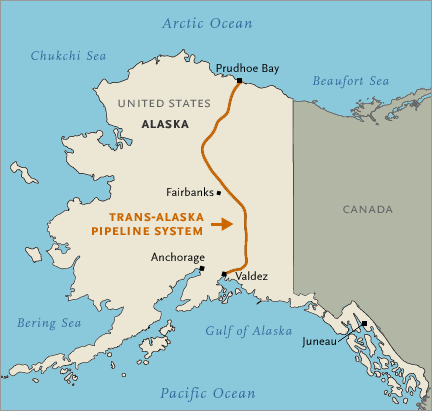
Oh well ... at least we don't live in Fairbanks, Alaska, where in a same year temperatures could go from 60 below zero in winter to a scorching 95-degree long summer day.  Yes, the place has the world record for such a temperature range!
A couple of summers ago, it was a 84-degree day that I experienced in Fairbanks--it was quite a surprise to experience that much heat near the Arctic Circle.
Even more surprising was the size of the mosquitoes--they seem to be way larger than the ones that suck my blood when I am in India.  But then, here in the US we super-size everything, eh ... muahahaha

So, you are thinking, "what do all these have to do with Essay 3?" and the answer is, well, you are absolutely right ... but, that was a whole lot of geography, right? ...

For Essay 3:
The materials I have for you for next week are about southern and eastern Europe.  Realistically, I don't see how everything can be related to into a single thesis that can be discussed in an essay.
But, I bet you will be able to weave into the same essay at least two of those materials.
So, your task will be to first read through all of them, and to watch the video, too.  Then, think about all that new info in your head.  Allow them to settle down--which is when you go for a bike ride, or simply lie down and catch a few rays.
By then, you will have had at least a couple of ideas that you will then want to work on.  Formulate a thesis  and go forth and write that essay.  You will be a tad constrained by working only with the materials I have given you.  So, you have to (yes, have to) get at least one additional reference material that you can use in support of your discussions.  This additional reference cannot be some random website, and nor can it be a mere news report.  It must be a credible analytical piece, which can be from an academic journal, or non-academic publications.
I hope I am making sense.  Let me know if there is anything that I can clarify here.
A reminder: you can operate with either the day or the date as the deadline for Essay 3.

ps: the World Cup comes to an end this weekend.

Thursday, July 8, 2010

Essay 2 Feedback

Hey, I have completed grading Essay 2.  I will soon email you the comments/grade.
A few thoughts related to the task:
  • First, a clarification about the suggested 800-word limit.  There is no hassle whatsoever if you exceed that count.  But, if you are at, say 682 words, that alone should raise a red flag that you have not sufficiently developed your arguments.  (additional clarification: that 682 was an arbitrary #; I did not choose that because there was any paper of that length!)
  • Given the relatively short paper, the quotes you use to strengthen the arguments can't be way too much.  Because, the more lengthy quotes you use, the less space you have to convey your point.  So, you need to learn to judiciously use quotes, versus paraphrasing and summarizing ideas. 
  • While I might sound repetitive, it is my job to keep reminding you about staying focused on the task.
    • While I might sound repetitive, it is my job to keep reminding you about staying focused on the task. 
    • (get the joke?  ha ha)
    • (get the joke?  ha ha)
  • Seriously. Very rarely in my classes I tell students that they can write a paper on anything.  As you would have noticed by now, I ask you to submit essays that are in response to focused questions.  So, even if you are used to writing papers on topics of your own choosing, you need to switch gears here. I do this way for a bunch of reasons.  Two in particular:
    • We faculty, for various reasons, don't do a good job of teaching students how to think and write, but then turn around and tell students that they should submit papers on any topic of their choice.  This almost always ends up doing disservice to students and learning, and society then complains about the falling communication skills of students.  So, over the years I have modified my pedagogy.
    • Increasingly, resources on the web have made it temptingly easy for students to put together papers that might contain a lot of borrowed material of various sorts, which then forces me to become a policeman.  I hate that task (which I have not had to do for the last six years; yay!!!), and my approach of focused essay questions preclude those to a large extent.
  • However, I do want students to get that experience of choosing their own essay topic--it is, after all, one of the best ways to learn. Which is why the third essay will not be in response to a question from me.  More on this in another email.
  • Ok, on to content ... (did I hear you mutter, "high time"?  hmmm ...!!!)
    I can extend Ochonu's arguments even further.  Just because I am from India, (and given that I opine a lot!) people erroneously conclude that I ought to be able to answer every question about India.  I simply can't.  But, what Ochonu warns is less about such a curiosity-driven inquiry, versus convictions that are based on ignorance and stereotypes.  For instance, it is one thing to ask me whether the caste system is still in place in India--which is the inquiry based on curiosity--versus concluding that India is not doing well because of the caste system there. 
    We can keep extending this further to pretty much every region on the planet.  Which is the biggest take away from the essay you wrote--while this notion was couched within the context of Africa and the materials on sub-Saharan Africa, the moral of the story, as we say, has a global reach.  By learning about the world, we will then stay away from stereotypes and simplification, and begin to appreciate and understand the complexities amongst, and within, the regions.
  • Hey, hey, stop rolling the eyeballs, and pay attention here :)  Do not become yet another example that is the reason for the discussion here.
Notice that I have built in many hyperlinks here.  If anything interests you, and you want to discuss it, I am ready ...
Finally, if you have read all these, then here is something that I hope will at least make you chuckle :)

Tuesday, July 6, 2010

Map work #1

Hey, as soon as I am done with this, I will email you individually my feedback on your work.

First, make sure you have addressed all the components of the map work assignment.  Once you read through and gather the information I require for the map work, I bet you will have picked up enough and more with respect to the assignment.  But, above that, I am confident that you will be impressed with yourself for having learnt stuff you didn't know prior to that ... and, as I mentioned in response to couple of your observations, perhaps you, like me, will be all the more thankful and excited that you live here in the good ol' US of A :)

I found it pretty interesting that The Economist had a lengthy piece on the wheat rust that I had required you to read.  Doesn't the map on the left make you worry?  I mean, these are the kind of analyses where I have to search hard for some good news!  I tell you, all these viruses and other organisms are always waiting around for us to drop our guard and, before we know it, ... kaboom!
Anyway, I strongly recommend that piece, now that you have an idea of the issue from the Uganda article you read.

I might take up the issue in detail in the Global Issues class that I am scheduled to teach in the fall term.  (was that a smooth advertisement or what!!!)

As a couple of you noted, the Sahel is an important part of Africa that makes a lot of sense when we talk about sub-Saharan Africa.  When you try to understand the regions, you will find that in many cases the "edges" of the region are zones of transition in a number of different ways. In the case of Sub-Saharan Africa, the zone of transition is called the "Sahel." Physical and human geographic characteristics markedly differ between above and below the Sahel.

We can see such zones of transition all around the world, though perhaps not as pronounced as it is with Africa.

While comparing Nigeria and the US, one student commented that oil spills seem to be common to both, while the magnitudes are different.  Yes, indeed.  Nigerians are all too familiar with oil spills.  (The photo, which is from this AP story, is captioned thus: In this June 20, 2010 photo, a men stands in an oil slick covering a creek near Bodo City in the oil-rich Niger Delta region of Nigeria.) 
One of the many dark sides of such spills is that they tend to be at economically and ecologically rich areas.  The delta region in Nigeria is one of those stories.  

Finally, in case you wonder why I follow this kind of a teaching/learning approach ... where I don't "lecture" for you to take notes ... I believe in learning-by-doing.  In this course, and in the online mode, I then provide you with the guidelines in order to provide a structure to that kind of learning,  And then I come back at the end of it all with my clarifying notes.  To some extent, it is also why I don't use formal texts in most of the courses I teach--all the more so when so much material is so easily and freely available these days.
I am hoping that you don't find a need for a transition time (an educational Sahel?) into this format :)

Any questions?  Additional thoughts?

PS: in case you didn't keep track of the news, Africa is out of the World Cup ...

Monday, July 5, 2010

Grading delayed :(

Hey, according to my schedule, I would have by now wrapped up grading and returning the map assignment and the second essay.  But, a slight mishap, thanks to the notorious blue screen of death last night.

All is not lost--my computer is alive and well.  But, I did lose the Word documents that were open.  As has been my past practice, I had, ahem, all the assignment documents open, which means I re-start that process all over :)

Hence, a slight delay in the feedback ...

But, hey, at least summer is finally here ... and the temperature will reach into the 90s in two days?

Friday, July 2, 2010

Africa, maps, and ... hotdogs?

You may have noticed that there is no essay due next week.  It is for a reason that I had set up the schedule of tasks this way--after the Fourth of July hotdogs (!) I figured that you might not be quite ready to sit down to write a 800-word essay.

What?  I can't hear you ...
did you say thanks?  Aaawwww....  :)

(Yes, in my "real world" classes, this is the kind of awful humor with which I torture students!)

But, don't relax too much though--I do have a map-work assignment next week.

A couple of quick comments:

  • The length of essays--800 words--is a suggested length for two important reasons:
    • Without this suggestion, there is a possibility that students might not know whether the question requires a short essay at 250 words, or merits a 10-page treatment
    • Most newspaper columns are at this length.  In other words, my idea is that if you were to share your essay with people who have sufficient background information, then they should be able to understand right away what your arguments are.  In courses like this that are about breadth, I tend to emphasize this approach.
  • When you copy/paste maps into Word, you also need to ensure that you are not distorting the map. 
    • I.e., just because you want the graphic to fit into a part of the page, you should not shrink it alone one dimension alone
      • Make sure that both the length and the width are reduced or enlarged by the same ratio.
  • And, yes, provide the map assignment as one single document
    • The text and graphic should be in the same.  If you learn to do this now, you will find it wonderfully useful later on in your job, and personal life too.
Finally, in keeping with the World Cup motif, well, as I type this, the Ghana-Uruguay match is underway.  I noted earlier that the entire African continent is cheering for Ghana.  Let us see if that will be enough to propel them into the semi-finals.

Have a "fun"tastic Fourth of July weekend :)

Tuesday, June 29, 2010

Comments on Essay 1

I have completed reading and evaluating the first of the essays for this class.  I will soon email you individually my comments and the letter grades. 

A few thoughts related to the assignment
  • Focus on the writing.  
    • Improving the thinking and writing skills of students is a goal that we have in most courses, and the world outside also expects college graduates to be able to think and write at a certain level.
      • Spell-check, more than anything, is critical.  And this includes paying attention to words like "their" and "there"--even though they pass the spell-check filter, "their" is chance that the "write" word is not being used.  (Did I demonstrate the problem through this example here?)
  • Focus on the task.
    • When the directions require that "You need to include the appropriate quotes from Murphy and Wade", well, you need to weave into the essay appropriate quotes from those articles.  After all, this essay, like the rest of the assignments, is an opportunity for you to demonstrate that you have done the readings, too.
  • On Wade and Murphy
    • One of the important points that Wade makes, and absolutely relevant to this course, is the distinction between geography courses that are focused on specific topics--like GIS--versus a regional geography course like this one.  We can then extend Wade's observations to many other regional courses.  These regional courses are the "old" types of geography courses that have largely gone out of fashion, and Wade argues that these are far too important for us to stop teaching.  Not teaching these is the equivalent of the proverbial throwing out the baby along with the bath water.
  • On the quiz itself
    • The idea was not at all to put you on the defensive, or make you feel embarrassed, about your performance in the quiz.  In fact, none of the tasks I ever assign--in any course that I teach--is ever along those lines.  The questions in the quiz are essentially to trigger an awareness that there is a lot going on in the world that we might not be familiar with, and this range of questions is also representative of the breadth of geography itself.
    • Furthermore, the questions are not in the best format that I would like.  But some are better than others.  For instance, the question about Indonesia is relatively well-phrased.  However, the question about the leading exporter in the world is not, because of the ambiguity in terms of exports of manufactured goods, versus total exports of goods and services.  And with passage of time, the answer then is far from being a straightforward one.  Actually, we can complicate this even more by bringing in the idea of Purchasing Power Parity versus exchange rates; but we will reserve this for a 4xx-level course :)
  • On arguing your point
    • It is absolutely ok to challenge the ideas in the assigned materials.  But, arguments--whether in agreement or to point out the flaws--ought to be based on specifics. 
In the individual emails to you, the attachments will contain my specific comments.  Let me know if you think I can be clearer with the comments.
For now, I shall watch out for the first of the map-work assignments.

Finally, it looks like in the schedule of tasks I have consistently erred in the day of the week and the date for when the essays are due.  E.g.: The schedule says Friday the 26th--but, 26th was a Saturday.  I ought to accept responsibility on that one, which means that even if your assignments come in only by the date (and not the day) well, it will be ok.  My thanks to the student who pointed this out.