This is a blog for the online class in summer 2010. My plan is to use this as the space for my "notes", clarification, and to relay anything of interest to students.
The task I have for you here will not be a surprise if you have been in any of classes, particularly at the upper-division level. First, I will describe the task, and then the rationale
The "fun" task, which you need to complete (preferably) before the end of Wednesday:
Without changing the "Subject" line, and by sending your reply to the class (the geog310 address), tell us about the most interesting, exciting, or just "I did not know that before", thing you gained from this class.
Note:
Unlike with the assignments, do not merely email me
Make sure you respond to the entire class.
Do not change the "Subject" line
So that we will all immediately know the context of your email, and
It will also help me collate them.
If there is more than one that grabbed your attention
You may choose to write about only one, or
Write about 'em all ...
But, write only after spending a few minutes thinking through the proceedings of the entire term.
So, why this task?
Taking a course is more than for the mere purpose of checking off on a box of requirements for a major or minor, or whatever. Even if a course is one you took only because it was requirement, at least to faculty like me, every course is yet another window into making order out of the chaos that life is. Of course, the nature of inquiry is different from, say, philosophy to geography to biology.
However, in the process of taking courses towards graduation, more often than not we fail to take stock of what we have accomplished ... and that is not what I prefer. In my paradigm of teaching and learning, students and teachers would conclude the term with a discussion of the entire term. We have all done this as kids, for instance, when our parents asked us, "so, what happened at school today?" For whatever reasons, we don't continue with this wonderful practice as we get into higher education.
As with the evaluation rubric for papers, which I suggested you can use for other classes too, I recommend that you do the same for all the other courses you take as well. Imagine this scenario: at the end of every term, even if your instructor does not require of you, well, you spend some time thinking about every class you took (even if it was not a successful experience) and jot down your thoughts on what you gained. At the end of your college experience, such a compilation could be worth way more than the diploma itself. And you will have a fantastic scrapbook of sorts in the process.
Well, now you know what to expect at the end of the term if you ever find yourself in one of my classes again :)
I look forward to your responses.
PS: this is NOT an opportunity for you to evaluate the class, the course, or the instructor. You need to only reflect on the value added to your knowledge-base.
So, you had a look at the Indian Subcontinent, aka, South Asia. To one student, this was apparently the opportunity to begin to understand Bhutan. That place has fascinated me for years, ever since when I was in elementary school when I memorized the name of the young (then) king--Jigme Singye Wangchuk ... I hope to spend a couple of days there sometime, as soon as a few students are ready to underwrite my expenses ... :)
First, a little bit of soap-box talk, if I may ...
Well, here is the reality about the readings/videos I have assigned for you--unless there is an essay assignment related to them, it is up to you to read the essays and watch the videos, right? Like this week, for instance. Now, you might think that such a possibility arises only in online classes. Not so! Even in the regular classes, it is, after all, up to the student to read and get excited, or not. It is up to the student to attend classes, or not. It is up to the student to participate in the discussions in class, or not. You see what I mean? It is always up to the student. One big difference for the instructor is that, well, I don't end up talking to myself as I fear it happens sometimes (only sometimes) in my regular classes. Here, even these kind of notes I email you, well, at least unlike in the regular class, I don't see yawns, doodles, flat-out-face-on-the-desk-sleep, ... :)
As I have blogged elsewhere (like here, or here, or here), the online format re-focuses the attention where it rightfully ought to be--on students--and not on the faculty.
Ok, back to the regular content ...
As you can easily imagine, each of these regions we discuss in a week can be studied in detail in a course all by itself. for instance, if this week's content of South Asia grabbed your attention (as it ought to) then you can always follow up with a detailed ten week immersion of sorts into that region--through GEOG 315 that is taught by a faculty whom you know very well by now :)
What follows here is the kind of material you could further explore .... my point is to reinforce the notion that this World Regional Geography course is a broad introduction, like a general education course. I hope you will devote a little bit of your time and effort into understanding South Asia and East Asia, even after this course, because of the HUGE importance these two regions will have for the rest of your lives. Yes, I mean that, and not for any dramatic effect.
Yes, that is a map of South Asia on the left; click on it for a larger and detailed view.
Interesting to view the world quite differently, eh! In this case, Sri Lanka is on the top side of the map. It is from a collection of interesting maps at a site, appropriately called, Strange Maps.
You may have heard a lot about India's movie industry. Bollywood is not really all of India's movies because "Bollywood = Bombay + Hollywood. I.e., these are movies in the Hindi language typically produced in the city of Mumbai, whose old name was Bombay.
However, the industry is not merely in one language either--India is a land of many languages and dialects, and movies are made all across India with distinctly different story-telling styles and people who look very different too. (I grew up speaking Tamil, which is a Dravidian language, not connected to the Indo-European family of languages. Ram Sil, in the History Department here, comes from the land of the Bengali language, and David Hargreaves in the Linguistics Department has done extensive work on the Sino-Tibetan languages, which includes Nepali--the language that his departmental colleague, Uma Sreshta, grew up speaking). Click here to watch a scene from a Tamil movie, if you want to hear how the language sounds. (full disclosure: it has been decades since I have watched any Indian movie; I picked this clip just because it has English subtitles)
Naturally, other movie centers too want to play on the same idea. Tamil movies are from the city of Chennai (formerly known as Madras) and the industry is concentrated in an area of the city called Kodambakkam. Naturally then the Tamil movie industry is "Kollywood". In Lahore (Pakistan) it becomes Lollywood.
The Indian movie industry is very old--goes back to the early decades of the 20th century.
There is extensive Muslim involvement in Bollywood. To a large extent, it is a reflection of the market, which, thankfully, does not care about religion or ethnic origins. If it sells, good, and if it does not sell, that is the end. There is, of course, a long cultural influence of Islamic art and architecture in India, and a significant influence in the arts can be traced back to the Mughal Empire--the Mughals brought with them the Persian appreciation for arts and literature. The following is a scene from an old but classic movie about a famous Mughal love story. (Click here for a different version in which a user has added English subtitles)
Movies are merely one small slice of a number of South Asian topics one could explore: languages, religions, politics, poverty, gender, environment, ... It is one huge world out there, with a great deal of complexity. College education is all about getting a feel for the multifaceted world in which we live so that we--collectively--can be that much wiser when we make decisions.
Finally, if you have read until here, well, a reward for you :)
Here is Nellie Furtado singing the first minute or so from a Hindi movie song. She is a product of globalization, as we all are, and in her case she grew up visiting with classmates and friends whose families were from India. And thanks to her musical interests, naturally she picked up a few tunes as well ...
If you are then tempted to watch the original movie song version, click here.
If you feel like the contents of this email seem to be wrapping up the course, well, yes. I realize that we do not have a whole lot of time left. So, I encourage you to stay focused for one more week, and get the job done :)
As diligent, though awfully quiet, students, I bet you are fully aware--perhaps painfully so--of the final paper :)
Not only do I love Calvin and Hobbes, I am equally convinced that many of the comic strips contain profound wisdom. Such as the one that I have used here (of course, without the explicit written consent of Bill Watterson, who created this hysterically hilarious comic strip, and then suddenly stopped, which then drove people like me crazy!)
I tell students in my classes that there are very few courses where absolute memorization is mandatory. I would think that a course like "gross anatomy" might qualify. It is also fun and pleasure to memorize poems, so that we might casually recite appropriate verses and impress the heck out of people.
Otherwise, particularly with so much information available at your mouse-tip, there is no need to memorize trivial facts. We do need to master a few things though: how to search for information; how to evaluate good versus bad information; how to make sense out of that good information; and then how to put together convincing arguments supported by good information.
Which is the approach I employ in all my classes.
In the process of doing all these, we then end up knowing facts even without memorizing them. For instance, even though I did not require you to memorize facts about Tunisia, you know important things such as its location (North Africa), and that it is a lot more Mediterranean than the "African" that we stereotype ...
I.e., it is the understanding that I am after, because the knowledge that is stored in the memory automatically follows. It is like the advice we give students: do not focus on the "A" or "A-" but on learning--because the grades automatically follow.
So, take the final paper as an opportunity to learn a few things, and to demonstrate your understanding of what you have learnt. I am sure you will have fun with it then.
Of course, it will not be a case of write a paper on any topic that interests you, but you have to make sure you work within the following constraints:
The topic will be the territory (geographically and content-wise) covered in the materials that I have for you in the sixth and final week of this term.
Read those materials and watch the video.
Follow-up on whatever grabs your attention, and put together a thesis statement.
Set it aside and come back to it after a day, or at least a few hours.
Refine that into a well-articulated 75-word thesis statement.
Email me that thesis statement before July 23rd.
Keep in mind the rubric that I will use to evaluate your papers
If you have never been given such a rubric, then I strongly encourage you to use this in any course that you take, even if that course is not taught by me.
Defend your thesis statement in a 2,000-word paper. In doing so:
You may use all the materials from Week 6
You may use any of the other materials you have come across anytime in this class.
You need to, have to, get at least four additional references that can help support your arguments. These four ought to be authoritative and analytical--not mere blog posts, or news reports.
Email me your final paper before Sunday, August 1st.
(Please ignore the Aug 2nd that I had mentioned in the website--I need to turn the grades in soon after!!!)
Enjoy the rest of the summer :)
You can always check with me about the progress you are making with the final paper, as long as:
you demonstrate you have done significant work, and have thought through
I hope I am clear here with my instructions on the final paper. Let me know if I can clarify anything here.
Now, I shall start grading your latest map assignments. If only I had not created so much work for myself, eh!!!
So, apparently I emailed you the feedback on the map-work task related to North Africa and the Middle East, in which I wrote, ahem,
I will soon email you my feedback and grade
Only to completely forget following up on it!
Thanks to the reminder from Erik, I realized the omission. Unlike the pop song from a couple of years ago, I hope it is not too late to apologize ... Or, should I say, oops, I did it again!
Ok, I will stop with this, and just say sorry.
I emailed all my feedback, and have already heard from one student as well ...
Here I am about two hours later, and a sudden thought: why waste this opportunity! I might as well share more thoughts related to the North Africa/Middle Eastern region. (I do wonder if anybody is actually listening though. But, I suppose I get paid for it whether anybody is listening or not. Aahh, that old philosophical problem of tree falling in the forest!)
As one student noted, because it is mostly a desert area, population seems to be concentrated in a few places were the conditions are less awful compared to the other areas.
A contrast to the US, the student notes.
The contrast are the cities of Phoenix and Las Vegas (the city in the photo here)--two cities that are large, with the fastest growth rates over the last decade, and these are in awfully hot and arid places when we have lots of more hospitable areas in the country where water, in particular, might not be a serious issue to fight over.
Yet, here were have these two cities.
To which, my remark was that this is yet another evidence of the remarkable affluence we enjoy here in the US. As the old saying goes, with money, water will flow uphill!
Another student noted the value in Azar Nafisi's remark:
“To talk of “the Muslim world” is to reduce countries, cultures, and histories as vastly different as Malaysia, Indonesia, Afghanistan, Turkey, Iran, Saudi Arabia, Egypt, and Morocco to a single aspect, namely religion”.
We don't think of a monolithic Christian world, because we even intuitively understand that there are enormous differences based on language, ethnicity, the emphasis in the belief, .... yet, we (not this class of students, of course) are often ready to believe that the "Muslim world" is all one. I mean, it does not take a professor to figure out that Muslims in Serbia might be very different from those in Bangladesh or Saudi Arabia.
Speaking of Saudi Arabia, I "wrote" in one student's assignment that for centuries that was merely "Arabia" ... which is why we have the "Arabian Nights" and not the "Saudi Arabian Nights" :) BTW, the collection of tales that we refer to as the Arabian Nights include classics such as: Aladdin and the magic lamp, Ali Baba and the forty thieves, Sindbad the Sailor, ... a rich treasure. Again, I can't but wonder why we don't discuss such historical literary pieces at our university ... Well, there I go again on a tangential point. Hmmm, what was I talking about? :) Oh, yeah, "Saudi Arabia" has that prefix now because of its ruling family that is the House of Saud.
Yet another student noted that
"the geographical boundary of the Sahara separates culture, where countries residing in N. Africa actually view themselves as identifying more with the cultures of Europe than of the countries south of the desert."
Again, yes indeed. By now we would have cleared any misconception that somehow everywhere in Africa the physical and human geography is the same. I also added an anecdote about a graduate schoolmate of mine and his wife, who were both from Tunisia. (In your mind can you now draw a map of North Africa and picture Tunisia there?) They looked and behaved very European, though his accent was Arabic ...
Finally, as a rejoinder to a student who had lots of interesting things about Iran, well, that country, which we all know is Islamic, is also home to Mt. Ararat--well technically this is on Turkey's side of their borders.
So, why does one mountain deserve a mention here?
In the Judeo-Christian tradition (i.e., Jewish, Christian, and Islamic) it is believed that Noah's Ark came to rest upon Mt. Ararat
Despite your track record as a quiet class, I shall look forward to additional thoughts/comments :)
Hey, this has been one quiet online class so far. Other than that brief flurry of discussions related to an assignment that was due, well, it has been way more than all quiet on the Western front (wasn't that a pun!)
I trust it is because things are going peachy; let me know if otherwise.
Now, before I get to the map work stuff ...
I am sure you have not forgotten the piece on Uganda that you read. And, maybe that was the trigger for you to ever look up a country called Uganda on a map, thanks to which you now know where it is. (The country is way more notorious for Idi Amin, the cannibal dictator, portraying whom won the Oscar for Forrest Whitaker.)
Anyway, the last couple of days Uganda has been in the news because of bomb blasts that killed many during the World Cup finals:
At least three bombs exploded on Sunday night in the Ugandan capital, Kampala, while the World Cup match between Spain and the Netherlands was under way in South Africa. ...
Visiting the sites of the bombings on Monday, President Yoweri Museveni of Uganda condemned the attackers as "backwards and cowardly." ...
Officials said that besides Ugandans, the dead included Indian, Ethiopian, Eritrean and Congolese nationals.
On the one hand, by taking a course like this, you get to know the rest of the world. On the other hand, it then also means that we begin to realize that it is one chaotic world out there, among all the good things as well. We then realize all the more that Humphrey Bogart's Rick was right in Casablanca when he says, "it doesn't take much to see that the problems of three little people don't amount to a hill of beans in this crazy world."
Now, that was a movie ... but, I digress!
Of course, the latest map work assignment you submitted was not about Uganda or East Africa, but was about North Africa and West Asia.
You would have noticed as you put together the maps for the region that the Saudi Arabian peninsula is in the heart of this geographic area.
And then it might have suddenly dawned on you that Europe is not far away from these places.
Of course, Spain and Morocco have a long history--the French also had their influence on Morocco, which comes across very well in, ahem, Casablanca! It is only a slight exaggeration that Morocco is only a stone's throw away from Spain. And that is one huge stone: Gibraltar ... hahaha ...
BTW, Gibraltar itself is a British territory--neither Spain's nor Morocco's!
My point here is that sometimes merely looking at a regional map will begin to reveal an incredible number of stories. As I noted at least once before, get yourself an inexpensive world atlas if you already don't have one, and the school-less month of August will become that much more exciting :)
To a large extent, this North Africa/West Asia was about one-half of the Ottoman Empire at its peak, as the following map shows:
So, yes, this is a region that has a lot of history. After the end of World War I, in which the Ottoman's did not side with the winning side, the empire was carved up among the victorious, and later on led to the formation of many of the countries with their current borders. The unfortunate downside is that this is also one of the regions in the contemporary world that seems to cause way more than its fair share of geopolitical news.
Wouldn't you agree with me that the university needs to offer courses about the countries in this region? ... unfortunately, here at WOU, we don't offer enough courses for students to begin to understand the land and its peoples. I don't mean merely the Geography Department, but the entire university. I tried to rally colleagues about this way back in 2003, and soon realized what it means to follow in the footsteps of Don Quixote and feel like I am tilting at windmills ...
But, I digress,, again :)
So, there you have my lecture, with a bunch of hyperlinks. As always, I am all ears (idiom-wise!) for your rejoinders and comments.
Hey, if you are like me ... well, I feel sorry for you ... ha ha ha :)
Ok, if you are like me, then you are thinking it will be neat if the sun's light and heat were evenly distributed throughout the year. We could have 70 degree days all the time.
In fact, a few years ago, a mathematician/physicist proposed--as a thought experiment--that we have a lot of nuclear bombs to get rid of, and those might be enough to blast the moon into pieces.
Once the moon is gone, then Earth will no longer feel the moon's gravitational effect, which is one of the reasons why the planet is tilted. It is the tilt that causes the seasons as we experience them the farther we are from the equator.
Bingo, 70 degree days forever here in Oregon!
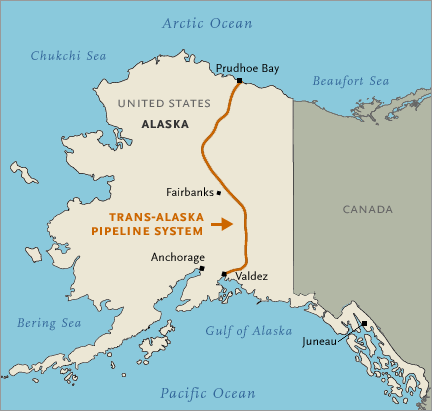
Oh well ... at least we don't live in Fairbanks, Alaska, where in a same year temperatures could go from 60 below zero in winter to a scorching 95-degree long summer day. Yes, the place has the world record for such a temperature range!
A couple of summers ago, it was a 84-degree day that I experienced in Fairbanks--it was quite a surprise to experience that much heat near the Arctic Circle.
Even more surprising was the size of the mosquitoes--they seem to be way larger than the ones that suck my blood when I am in India. But then, here in the US we super-size everything, eh ... muahahaha
So, you are thinking, "what do all these have to do with Essay 3?" and the answer is, well, you are absolutely right ... but, that was a whole lot of geography, right? ...
For Essay 3:
The materials I have for you for next week are about southern and eastern Europe. Realistically, I don't see how everything can be related to into a single thesis that can be discussed in an essay.
But, I bet you will be able to weave into the same essay at least two of those materials.
So, your task will be to first read through all of them, and to watch the video, too. Then, think about all that new info in your head. Allow them to settle down--which is when you go for a bike ride, or simply lie down and catch a few rays.
By then, you will have had at least a couple of ideas that you will then want to work on. Formulate a thesis and go forth and write that essay. You will be a tad constrained by working only with the materials I have given you. So, you have to (yes, have to) get at least one additional reference material that you can use in support of your discussions. This additional reference cannot be some random website, and nor can it be a mere news report. It must be a credible analytical piece, which can be from an academic journal, or non-academic publications.
I hope I am making sense. Let me know if there is anything that I can clarify here.
A reminder: you can operate with either the day or the date as the deadline for Essay 3.
Hey, I have completed grading Essay 2. I will soon email you the comments/grade.
A few thoughts related to the task:
First, a clarification about the suggested 800-word limit. There is no hassle whatsoever if you exceed that count. But, if you are at, say 682 words, that alone should raise a red flag that you have not sufficiently developed your arguments. (additional clarification: that 682 was an arbitrary #; I did not choose that because there was any paper of that length!)
Given the relatively short paper, the quotes you use to strengthen the arguments can't be way too much. Because, the more lengthy quotes you use, the less space you have to convey your point. So, you need to learn to judiciously use quotes, versus paraphrasing and summarizing ideas.
While I might sound repetitive, it is my job to keep reminding you about staying focused on the task.
While I might sound repetitive, it is my job to keep reminding you about staying focused on the task.
(get the joke? ha ha)
(get the joke? ha ha)
Seriously. Very rarely in my classes I tell students that they can write a paper on anything. As you would have noticed by now, I ask you to submit essays that are in response to focused questions. So, even if you are used to writing papers on topics of your own choosing, you need to switch gears here. I do this way for a bunch of reasons. Two in particular:
We faculty, for various reasons, don't do a good job of teaching students how to think and write, but then turn around and tell students that they should submit papers on any topic of their choice. This almost always ends up doing disservice to students and learning, and society then complains about the falling communication skills of students. So, over the years I have modified my pedagogy.
Increasingly, resources on the web have made it temptingly easy for students to put together papers that might contain a lot of borrowed material of various sorts, which then forces me to become a policeman. I hate that task (which I have not had to do for the last six years; yay!!!), and my approach of focused essay questions preclude those to a large extent.
However, I do want students to get that experience of choosing their own essay topic--it is, after all, one of the best ways to learn. Which is why the third essay will not be in response to a question from me. More on this in another email.
Ok, on to content ... (did I hear you mutter, "high time"? hmmm ...!!!)
I can extend Ochonu's arguments even further. Just because I am from India, (and given that I opine a lot!) people erroneously conclude that I ought to be able to answer every question about India. I simply can't. But, what Ochonu warns is less about such a curiosity-driven inquiry, versus convictions that are based on ignorance and stereotypes. For instance, it is one thing to ask me whether the caste system is still in place in India--which is the inquiry based on curiosity--versus concluding that India is not doing well because of the caste system there.
We can keep extending this further to pretty much every region on the planet. Which is the biggest take away from the essay you wrote--while this notion was couched within the context of Africa and the materials on sub-Saharan Africa, the moral of the story, as we say, has a global reach. By learning about the world, we will then stay away from stereotypes and simplification, and begin to appreciate and understand the complexities amongst, and within, the regions.
Hey, hey, stop rolling the eyeballs, and pay attention here :) Do not become yet another example that is the reason for the discussion here.
Notice that I have built in many hyperlinks here. If anything interests you, and you want to discuss it, I am ready ...
Finally, if you have read all these, then here is something that I hope will at least make you chuckle :)